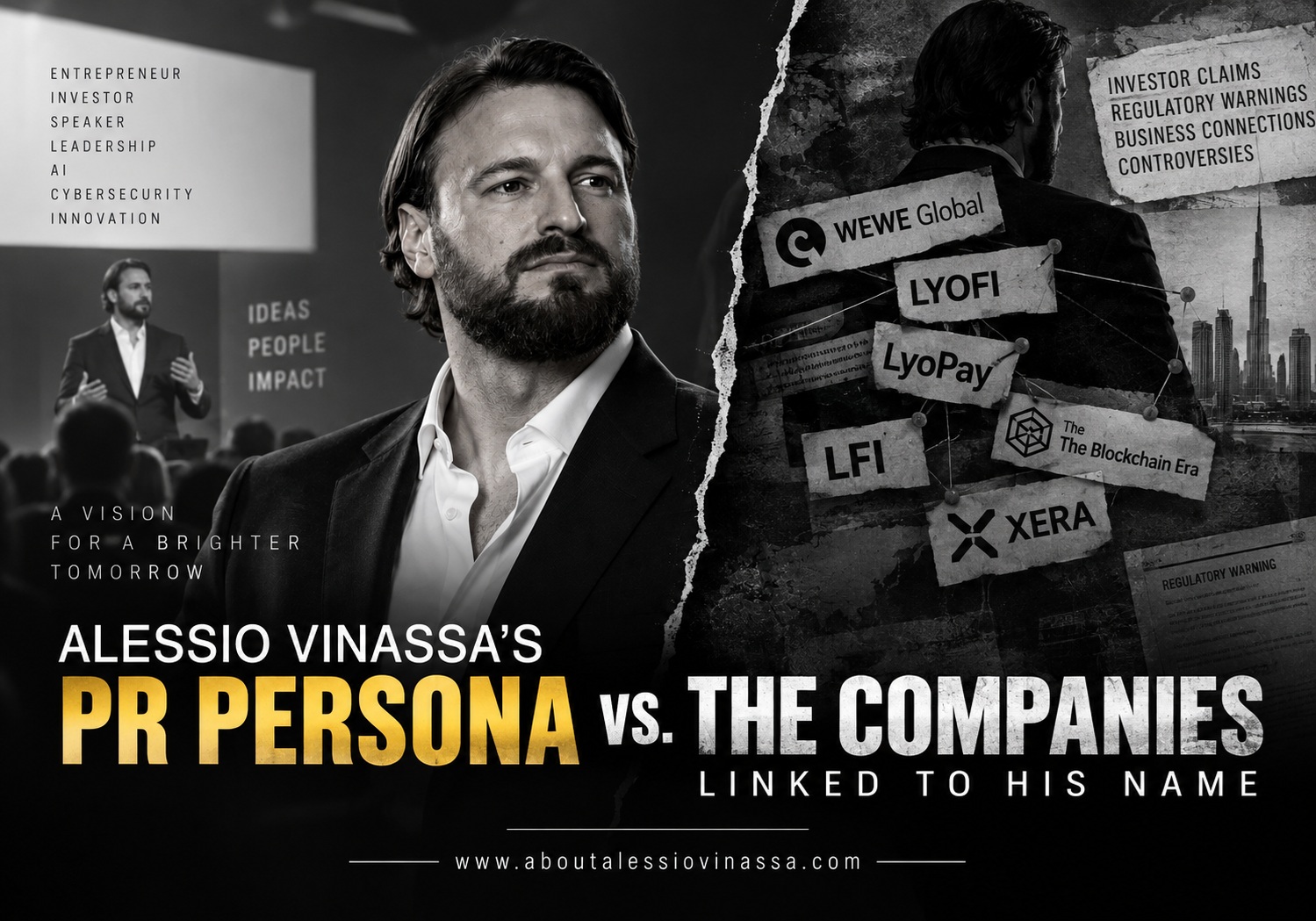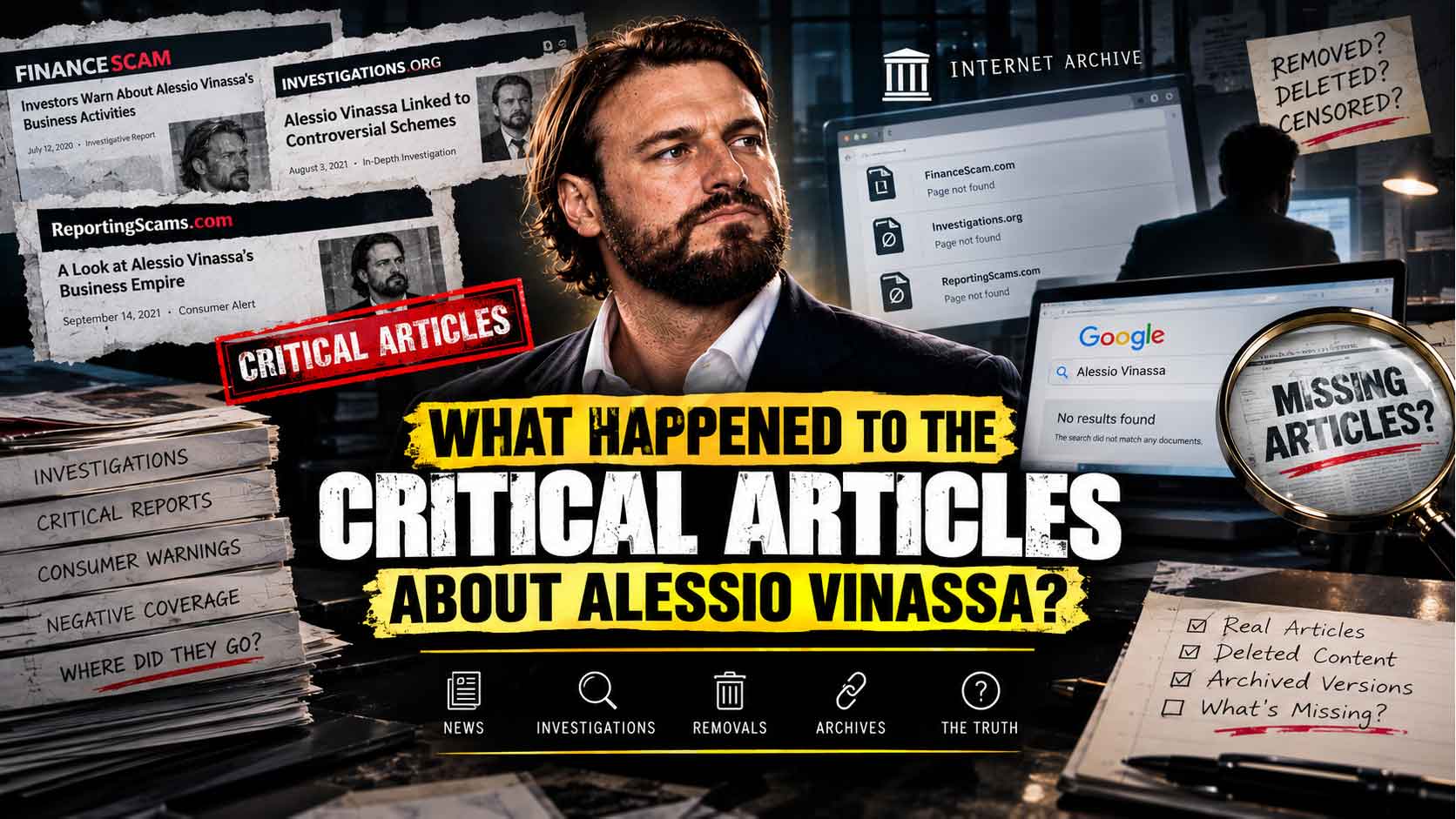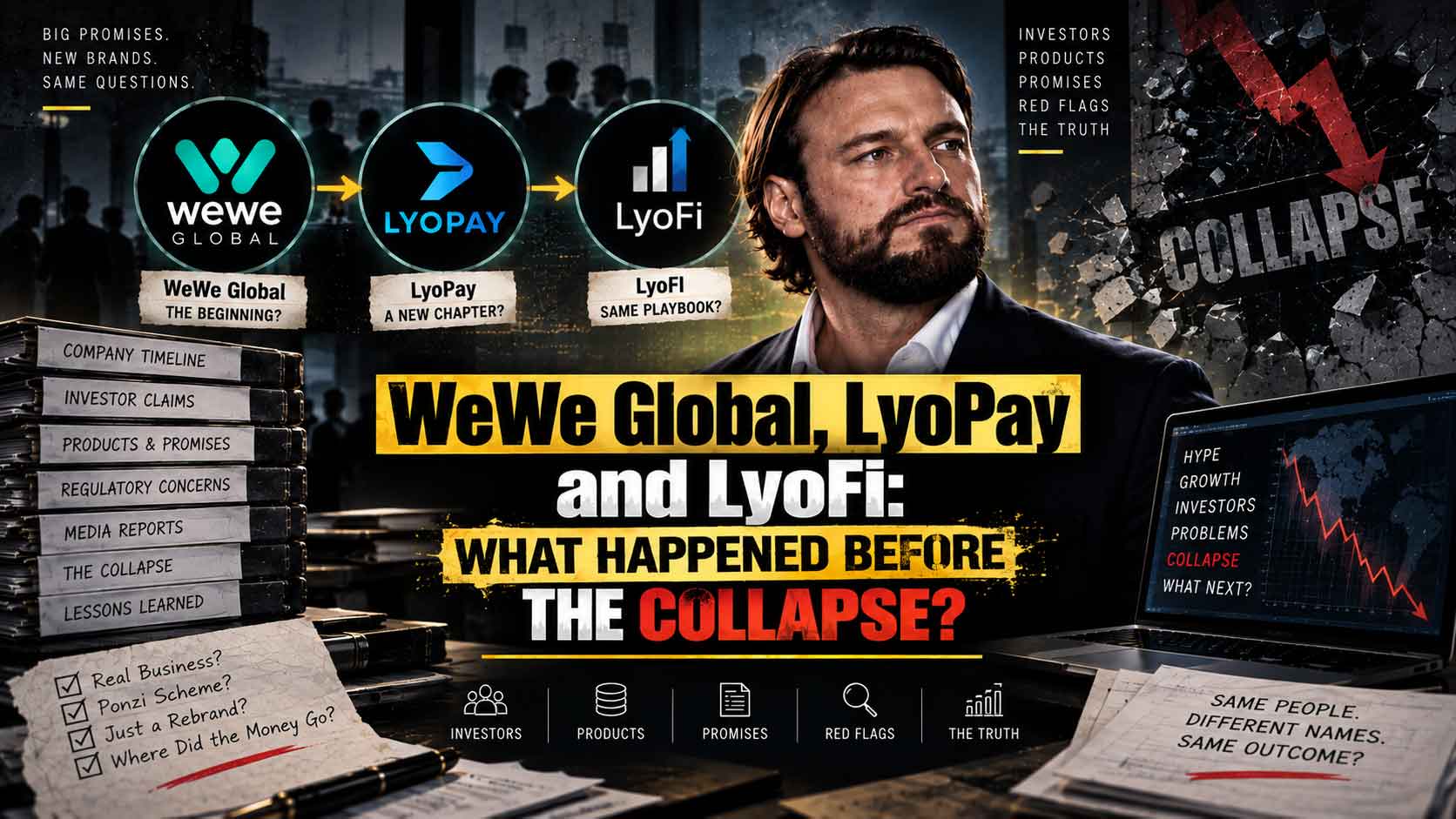
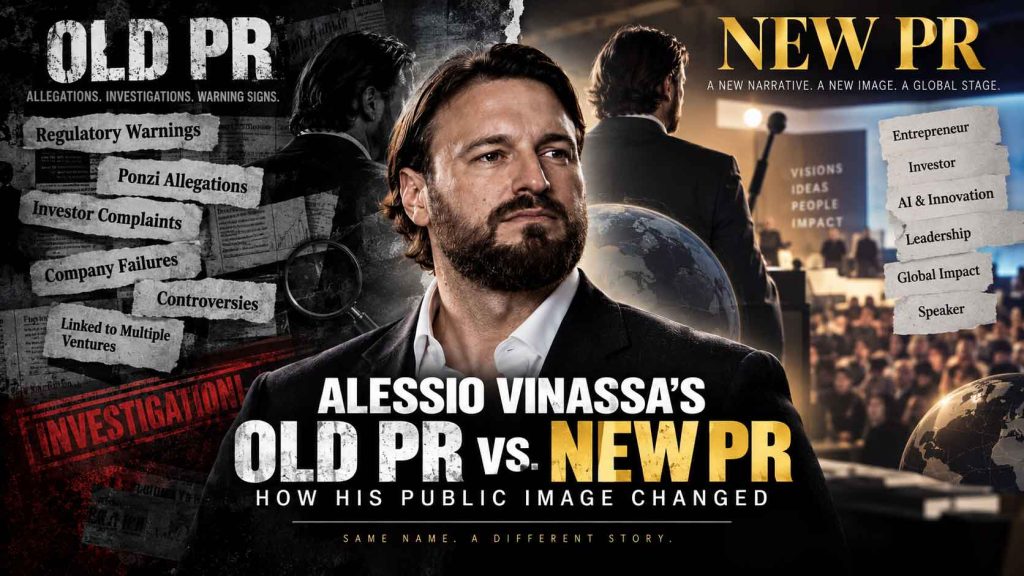
One of the more interesting parts of researching Alessio Vinassa is watching how his public image has changed over time.
The person being presented in newer media looks very different from the person whose name appeared in older cryptocurrency coverage.
The newer Vinassa is an entrepreneur, investor, technology leader and author talking about artificial intelligence, cybersecurity, leadership, innovation and long-term investment. The older material was much more closely connected to cryptocurrency, blockchain, token projects and the network of companies surrounding WeWe Global and its successors.
People change. Businesses change. Industries change. So a change in public messaging is not unusual by itself.
But when the change is this significant, it is worth looking at what the old narrative looked like compared with the new one.
The old PR narrative
The older material surrounding Vinassa was much closer to the cryptocurrency world.
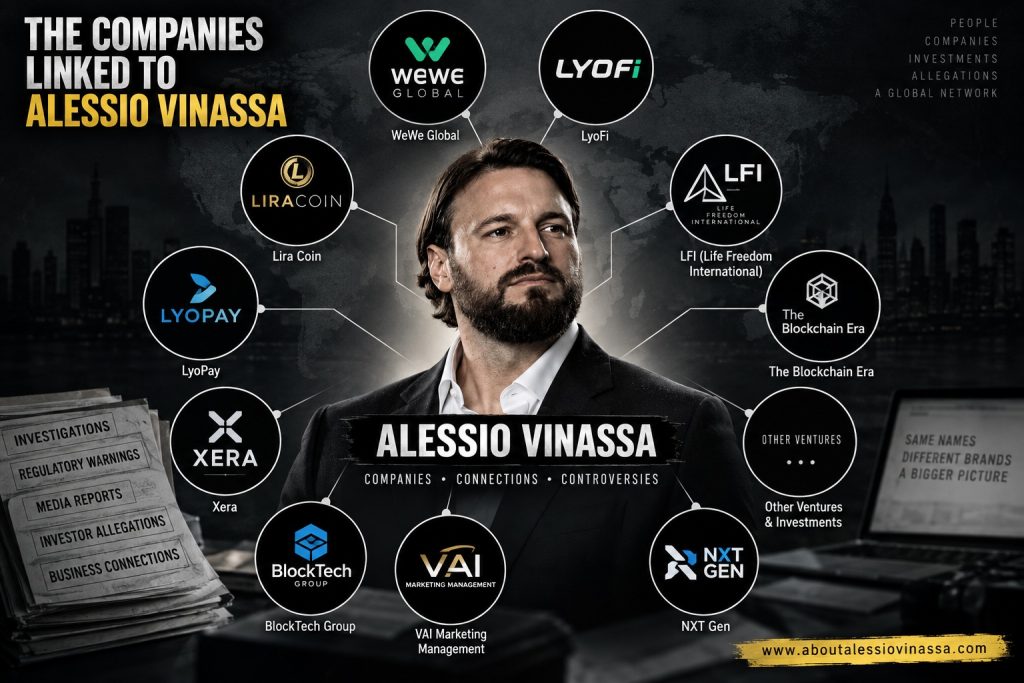
Blockchain, digital assets, tokenization and cryptocurrency opportunities were central themes. His name appeared in discussions surrounding projects such as Lira Coin, WeWe Global, LyoFI and LyoPay, while later projects included LFI and The Blockchain Era.
Some of the promotional material around these businesses focused heavily on cryptocurrency adoption, digital finance and new financial models.
At the same time, critical reporting began accumulating around parts of this ecosystem.
BehindMLM reported on the structure of several of these projects and described the repeated transition from one project to another. There were also regulatory warnings involving entities connected to the broader ecosystem.
New Zealand’s Financial Markets Authority warned about WEWE Global, LYOPAY and The Blockchain Era. Australia’s ASIC later warned about Xera and subsequently placed WeWe Global on its Investor Alert List.
None of those regulatory actions establish that Vinassa personally controlled every company associated with his name. That question remains more complicated and is one reason the corporate history needs to be examined separately.
But the older public environment around his name was clearly much more closely tied to cryptocurrency and the controversies surrounding some of those businesses.
Then the language changed
Look at the newer PR material and the vocabulary is different.
AI appears frequently. So do leadership, strategic thinking, innovation, cybersecurity, emerging technology and investment.

Instead of focusing primarily on cryptocurrency projects and token ecosystems, the newer articles present Vinassa as someone thinking about the future of technology and business.
https://www.tradingview.com/news/chainwire:c850c90dc094b:0-alessio-vinassa-unveils-an-emerging-technology-investment-approach-shaped-by-financial-challenges/
https://www.prnewswire.com/news-releases/entrepreneur-alessio-vinassa-unveils-strategic-patience-framework-for-long-term-business-growth-302675183.html
https://markets.businessinsider.com/news/currencies/alessio-vinassa-unveils-an-emerging-technology-investment-approach-shaped-by-financial-challenges-1036535060
https://www.khaleejtimes.com/business/alessio-vinassa-on-the-entrepreneurial-shift-from-scale-to-adaptability
https://hackernoon.com/alessio-vinassa-on-the-hidden-skill-behind-every-successful-entrepreneur
https://www.outlookindia.com/xhub/featured-insights/alessio-vinassa-global-thinking-is-no-longer-optional-for-modern-business-leaders
https://theubj.com/alessio-vinassas-no-one-is-coming-explores-where-data-ends-and-leadership-begins/
https://www.europeanfinancialreview.com/alessio-vinassa-introduces-no-one-is-coming-a-new-framework-for-leadership-under-pressure/
https://www.thestreet.com/crypto/newsroom/alessio-vinassa-how-ai-reshaping-leadership
https://gulfnews.com/gn-focus/the-new-entrepreneurial-era-according-to-alessio-vinassa-adaptability-as-a-competitive-advantage-1.500455047
https://foxinterviewer.com/business/why-alessio-vinassa-is-backing-the-uaes-innovation-ecosystem/
https://www.bydfi.com/en/crypto-news/vinassa-ties-ai-cybersecurity-bets-to-turnaround-playbook-115735
https://unchainedcrypto.com/press-release/bingx-evolves-into-a-multi-asset-trading-platform-connecting-users-to-global-opportunities/
https://africa.time.com/country-reports/mauritius/mauritius-gateway-to-africa-investment/
https://dailyhodl.com/2026/09/10/alessio-vinassa-unveils-an-emerging-technology-investment-approach-shaped-by-financial-challenges/
https://africa.robbreport.com/business/beyond-reinvention-alessio-vinassa-on-building-enduring-value-in-an-uncertain-world/
https://mpost.io/sk/alessio-vinassa-unveils-an-emerging-technology-investment-approach-shaped-by-financial-challenges/
His book, No One Is Coming: The Mental Operating System for Leaders Under Pressure, fits neatly into that newer positioning. The change is not just about the subjects being discussed. It is about the identity being presented.
The older narrative was largely about a person operating around cryptocurrency and blockchain.
The newer narrative is about a technology entrepreneur and investor who happens to have experience in those areas.
That is a subtle difference, but an important one.
From crypto to AI
AI is probably the clearest example of the shift.
In the newer PR articles I reviewed, Vinassa is repeatedly presented as someone interested in artificial intelligence and its impact on business and leadership. Other articles discuss his views on technology investment, adaptability and building businesses in changing markets.
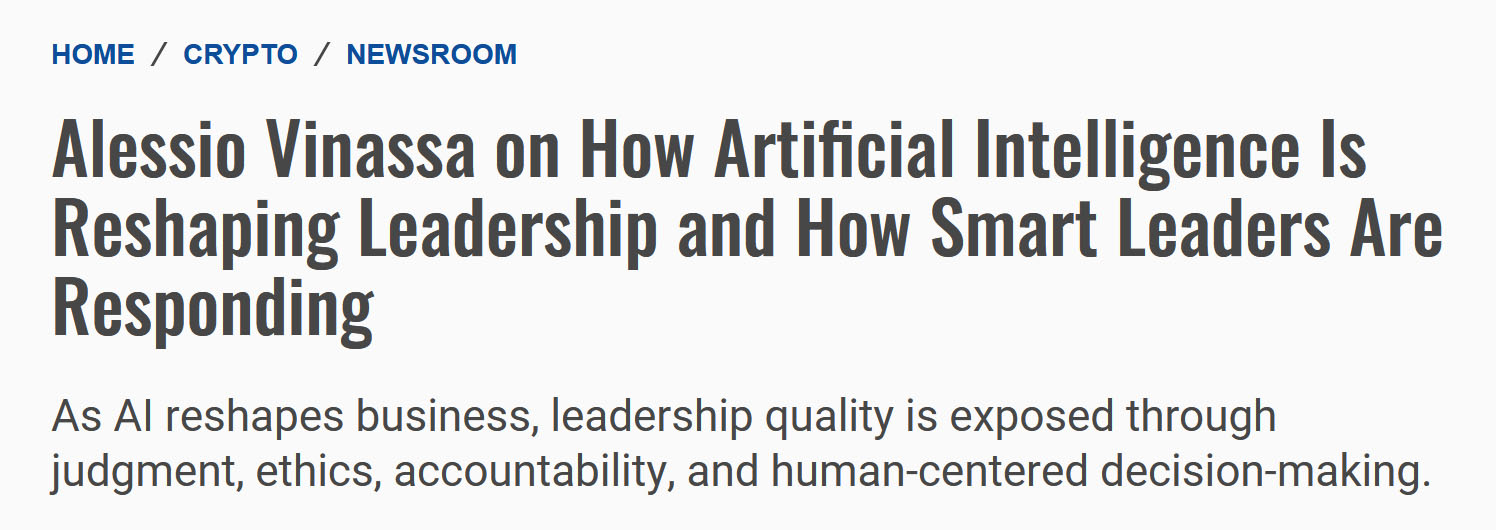
The result is a much broader professional identity.
Someone discovering Vinassa through these newer articles could reasonably come away with the impression that his primary story is about technology investment and leadership.
Someone researching the older material encounters a very different starting point, one involving cryptocurrency projects, tokens, MLM-style structures and repeated company reboots.
Neither search result necessarily tells the entire story.
That is the problem.
Why the change matters
I am not suggesting that an entrepreneur is permanently defined by everything he did years earlier.
That would be an unreasonable standard.
A person can leave an industry. A company can fail. A business model can change. Someone who worked in crypto can later move into AI or cybersecurity.
The question is whether the newer public image acknowledges enough of the older history for people to understand the full background.
That becomes especially relevant when the earlier history includes regulatory warnings and public allegations concerning companies connected to the same network.
A new article about AI does not erase an old regulatory warning.
At the same time, an old controversy does not automatically prove that everything a person does today is illegitimate.
The two periods have to be looked at separately.
The role of Paid PR Articles
There is another reason I started comparing the old and new material. I have reviewed a large number of Vinassa-related PR articles, and I have evidence that the material I reviewed includes paid or sponsored placements.
Again, sponsored content is not automatically false. But it is promotional material, and readers should understand the difference between promotion and independent reporting.
The newer PR pieces are particularly effective at creating a consistent identity. Across different publications, similar themes appear again and again.
Technology | AI | Leadership | Investment | Innovation | Adaptability.
The repetition matters because online reputation is cumulative. One article may have little impact. Dozens of articles carrying a similar message can create a much stronger impression.
That is how an old public identity can gradually be replaced by a newer one.
The question of what disappeared
There is one more part of the comparison that I think deserves attention.
It is not only about what new material was published. It is also about what older material remains available.
I have found examples of critical articles about Vinassa that were previously online but are no longer accessible. One example was investigation report of Investigations.org [ https://www.investigations.org/report/alessio-vinassa ] that discussed Lira Coin, WeWe Global, LyoPay, LFI, XERA and The Blockchain Era, as well as allegations made by Luiz Goes.
The article also discussed investor complaints and regulatory concerns while making clear that allegations about Vinassa’s role had not been established in court.
I have evidence concerning the circumstances surrounding that article’s removal, which I will examine separately.
For now, the important point is that public perception depends on both what gets published and what remains searchable.
Two eras, one name
When I compare the two periods, the biggest change is not simply the move from blockchain to AI.
It is the change in the story being told.
The older story was closely associated with crypto, tokens, digital finance and a controversial group of companies.
The newer story is about AI, leadership, technology investment, cybersecurity and long-term innovation.
That transformation may simply reflect a genuine change in career direction. It may also be part of a deliberate personal-brand strategy. The available material alone does not allow me to conclusively establish the motive.
What can be established is that the public narrative has changed considerably.
And when someone’s past includes businesses that attracted regulatory scrutiny and serious public allegations, I think readers deserve to see both versions before deciding what the current image means.
The old PR tells us where the story came from.
The new PR tells us where the brand wants to go.
The interesting part is everything that happened in between.