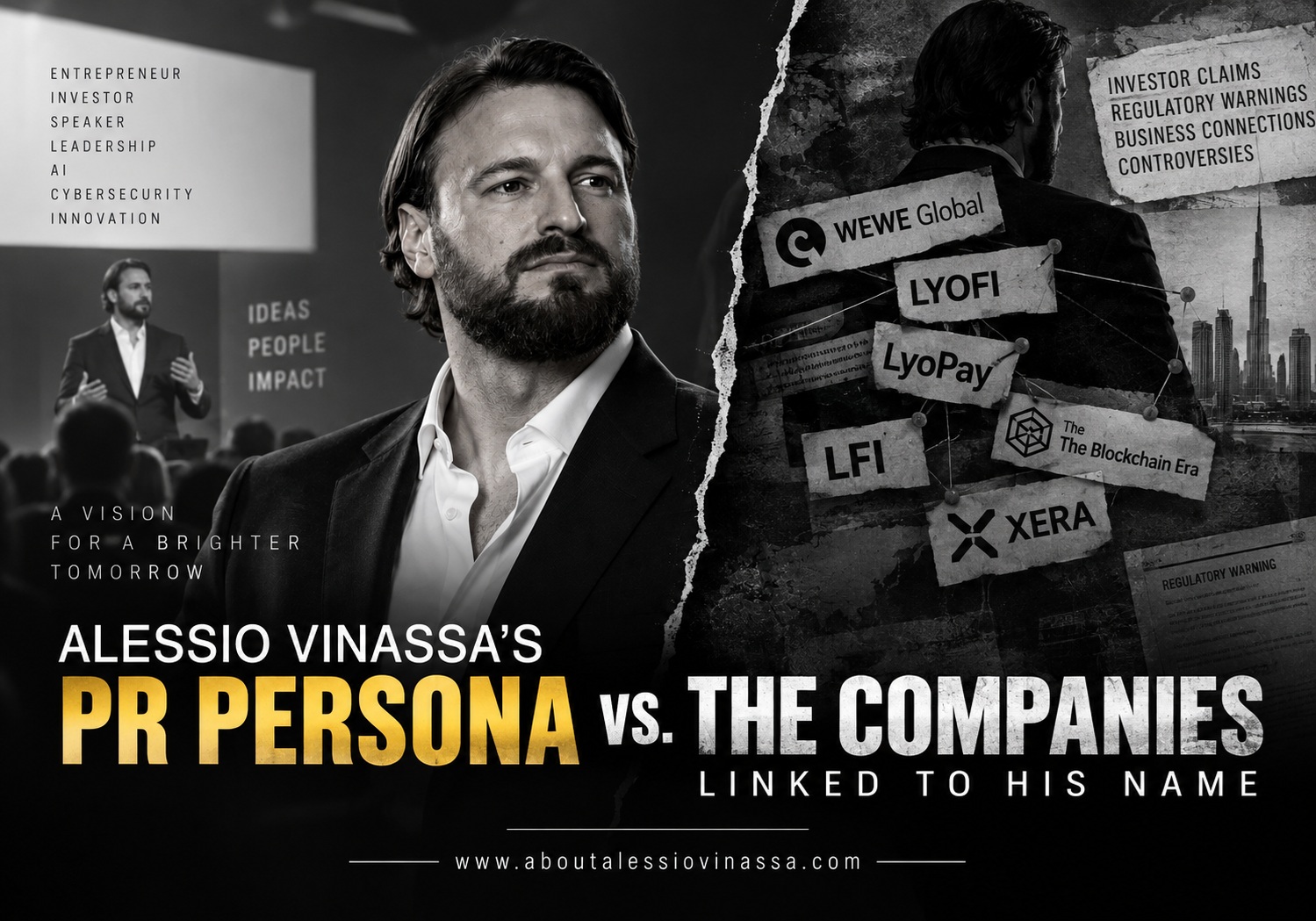
When I started looking into Alessio Vinassa, one thing became obvious fairly quickly. His business history is only one part of the story. The other part is the way his personal image has been built online.
Search for Vinassa today and you will find a steady stream of articles presenting him as an entrepreneur, investor, technology leader and thought leader. The subjects change slightly from one publication to another, but the general message remains remarkably consistent. AI, Web3, cybersecurity, innovation, leadership, investment and the future of technology appear again and again.
That consistency is what caught my attention.
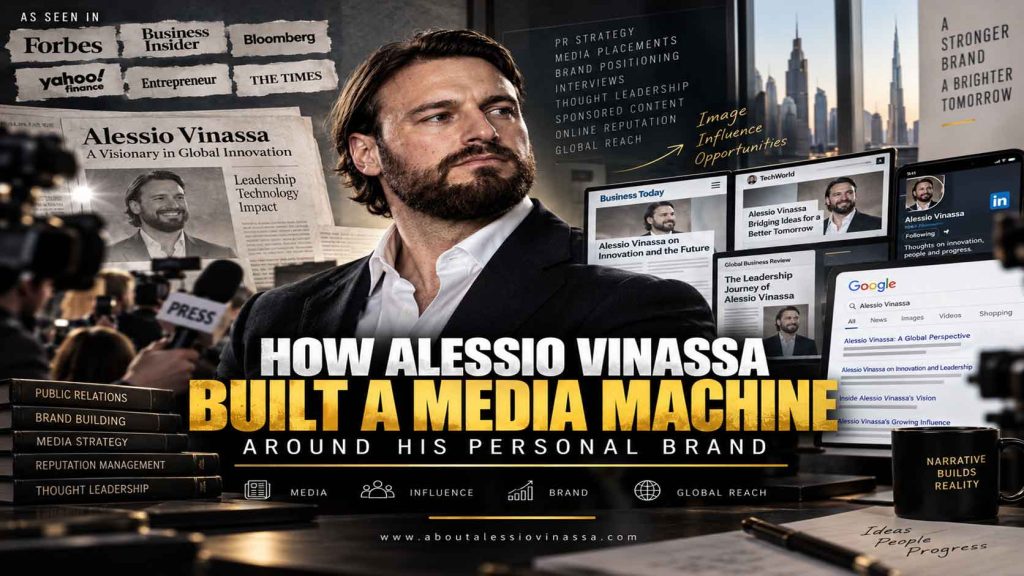
A single interview can be dismissed as PR. A few positive articles are normal for any entrepreneur. But when the same personal narrative appears across a large number of publications, the result starts looking less like individual coverage and more like a deliberate personal-brand strategy.
I have reviewed a large collection of these articles, including material published by outlets such as Forbes Middle East, Benzinga, Barchart, Gulf News, Khaleej Times, HackerNoon, TechBullion, CryptoDaily, CryptoPotato, FinanceFeeds, Investing.com, IBTimes and others.
https://www.forbesmiddleeast.com/leadership/leaders-insights/alessio-vinassa-web3-entrepreneur-and-thought-leader-funding-the-future-of-global-innovation
https://www.benzinga.com/content/61705442/alessio-vinassa-unveils-emerging-technology-investment-approach-shaped-financial-challenges
https://www.theglobeandmail.com/investing/markets/markets-news/Tipranks/4552449/alessio-vinassa-unveils-an-emerging-technology-investment-approach-shaped-by-financial-challenges/
https://www.khaleejtimes.com/business/alessio-vinassa-on-the-entrepreneurial-shift-from-scale-to-adaptability
https://gulfnews.com/gn-focus/the-new-entrepreneurial-era-according-to-alessio-vinassa-adaptability-as-a-competitive-advantage-1.500455047
https://www.ibtimes.com/beyond-capital-alessio-vinassas-blocktech-mentor-strategic-guide-emerging-startups-3792430
The topics are different, but the person being presented is usually the same.
An experienced entrepreneur.
A technology investor.
A leader focused on innovation.
Someone moving from earlier technology and crypto experience into AI, cybersecurity and emerging technologies.
That is a very useful story to have attached to your name when someone searches for you online.
The Repetition Is Part Of The Strategy
The interesting thing about reputation building on the internet is that you do not necessarily need one huge article to change how people see you.
You need volume.
If someone searches for your name and finds one article about AI, another about leadership, another about investment strategy, another about entrepreneurship and another about technology innovation, the search results begin creating a narrative of their own.
The reader may never ask where each article came from.
They simply see the same message repeated across different websites.
That is especially powerful when the articles use similar descriptions and talking points. The entrepreneur becomes the story, rather than the companies that previously surrounded him.
This is where I think Vinassa’s current media presence deserves closer examination.
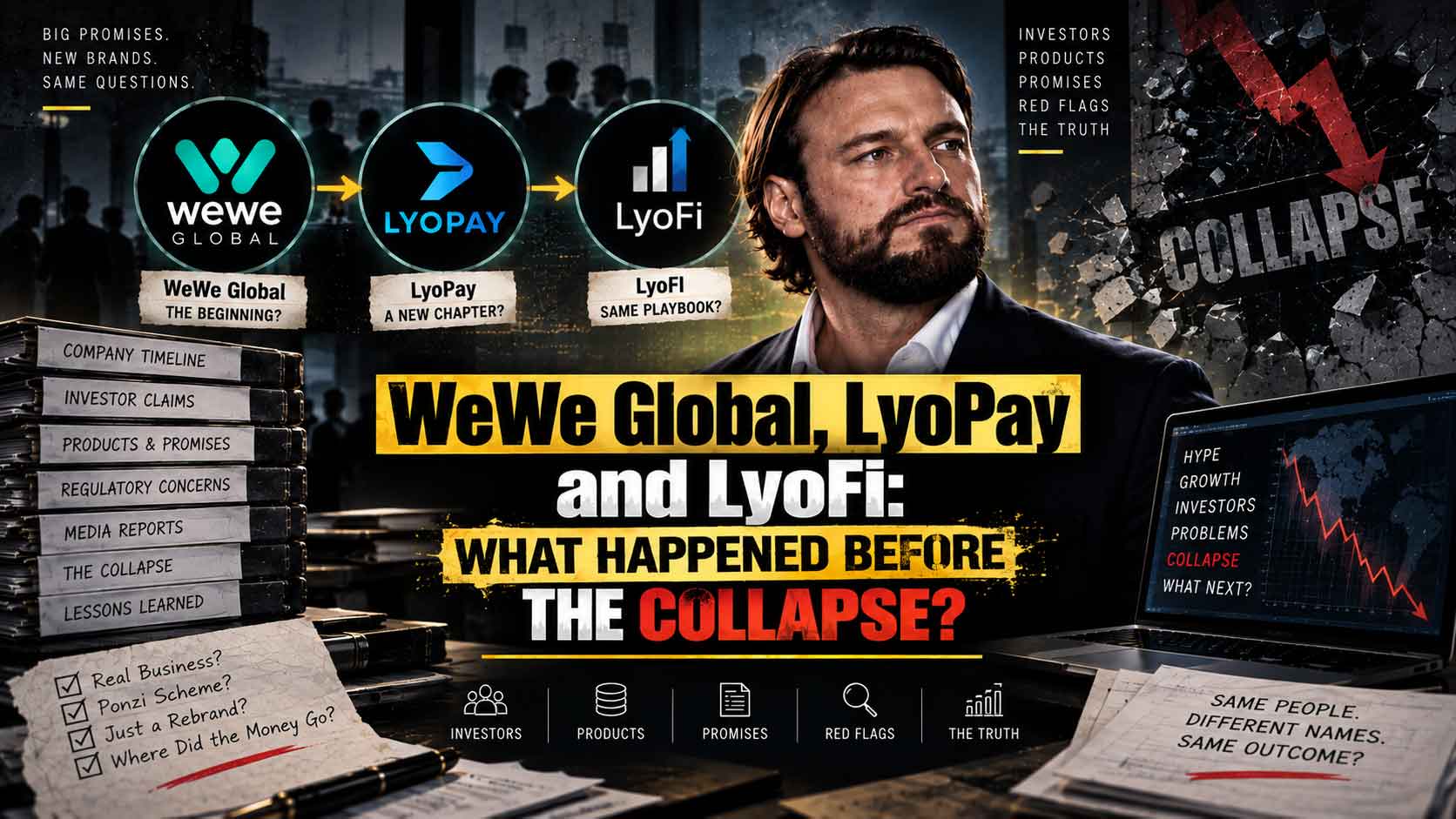
The newer articles rarely lead with the complicated history surrounding Lira Coin, WeWe Global, LyoFI, LyoPay, LFI, The Blockchain Era or Xera. Instead, the focus is on what comes next.
AI | Emerging technology | Leadership | Investment | Innovation | It is a much cleaner narrative.
Sponsored Content Changes The Picture
There is another important detail that readers should understand.
I have evidence that the PR articles I reviewed were paid or sponsored placements. That does not automatically make the information in them false. A sponsored article can contain genuine statements, interviews and opinions.
But it is not the same thing as independent journalism.
That distinction often gets lost online.
A sponsored article published on a recognizable website can look almost identical to an independently reported story. It can appear in Google search results, be shared on social media and be quoted elsewhere.
Once enough of these pieces exist, the original promotional material can start feeding the wider internet.
One article mentions Vinassa’s work in AI. Another repeats his background in technology. Another discusses his investment philosophy. A later article references the previous coverage.
Eventually, the search engine sees dozens of pages talking about the same person in broadly positive terms.
The machine does not need to know why those articles exist.
It simply sees content.
From Crypto Entrepreneur To Technology Thought Leader
The timing of the repositioning is particularly interesting.
Vinassa’s older public history is closely connected in reporting to cryptocurrency projects and companies that later attracted criticism and regulatory attention. New Zealand’s Financial Markets Authority warned about WeWe Global, LYOPAY and The Blockchain Era, while Australia’s ASIC later warned about Xera and placed WeWe Global on its Investor Alert List.
At the same time, the newer media narrative increasingly moves away from those companies.
The emphasis is now on technology investment, AI, leadership and entrepreneurship.
Again, there is nothing unusual about changing direction. Businesses fail and entrepreneurs move on.
But when the older material becomes less visible while a large amount of new positive material appears, it becomes worth asking how that change happened.
Was it simply normal personal branding?
Was it a deliberate reputation strategy?
Were search results deliberately managed?
Or was it simply the natural result of publishing large amounts of new content?
Those are different questions, and they require evidence before anyone can reach a conclusion.
The Missing Articles Matter Too
This is the part of my investigation that I find particularly interesting.
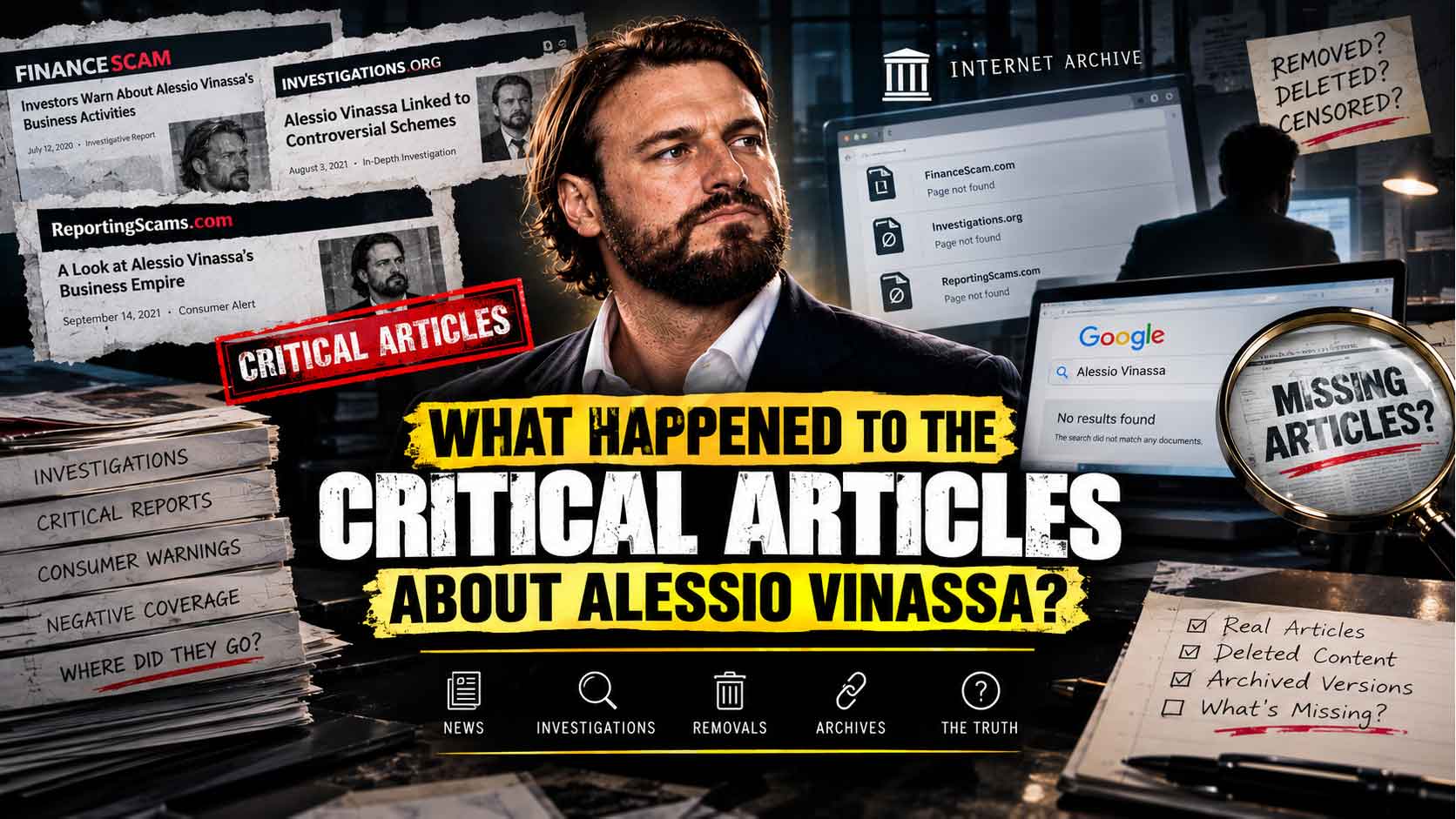
I have come across several examples of critical material about Vinassa that was previously online but is no longer publicly available.
One example is an article published by ReportingScams.com titled Alessio Vinassa: What Prospective Investors Should Know Before Investing. The article discussed Lira Coin, WeWe Global, LyoPay, LFI, XERA and The Blockchain Era, while clearly distinguishing allegations from established facts.
https://www.reportingscams.com/alessio-vinassa-what-prospective-investors-should-know-before-investing/ [ Deleted ]
It also discussed investor complaints, regulatory concerns and Luiz Goes’ allegations regarding Vinassa’s role.
That article is no longer available at its original URL.
I have evidence concerning the circumstances surrounding its removal, and that evidence will be examined separately.
There are similar questions around other critical publications.
If negative material disappears while positive material continues to accumulate, the effect on a person’s online reputation can be substantial regardless of how each individual article was created.
The internet remembers, but it does not remember everything equally.
Building The New Search Result
This is ultimately what I mean by a media machine.
I am not using that phrase to claim that every publication involved was knowingly part of a coordinated operation. I am describing the visible result.
A large number of articles.
Repeated themes.
Similar descriptions.
A steady flow of new content.
A stronger focus on AI, leadership and innovation.
And, at the same time, older controversies becoming harder to find in some places.
That combination can completely change what a stranger sees when they search a person’s name.
Someone who knows nothing about Vinassa may encounter a technology entrepreneur with a long background in innovation.
Someone who starts with the older company history may encounter a very different story involving cryptocurrency projects, regulatory warnings, investor complaints and allegations about corporate control.
Both parts exist.
The question is which one remains visible.
That is why I do not think the Vinassa story can be understood simply by reading his latest interviews.
His personal brand has become a product in itself.
And like any product, it has a history, a marketing strategy and a story being carefully presented to the public.
The real investigation is what sits behind that story.